
The Everyday Habits Employees Value Most in Managers
In fast-paced operational environments, leadership is built on the facility floor. Here are the everyday habits that drive retention, safety, and productivity on the frontline.
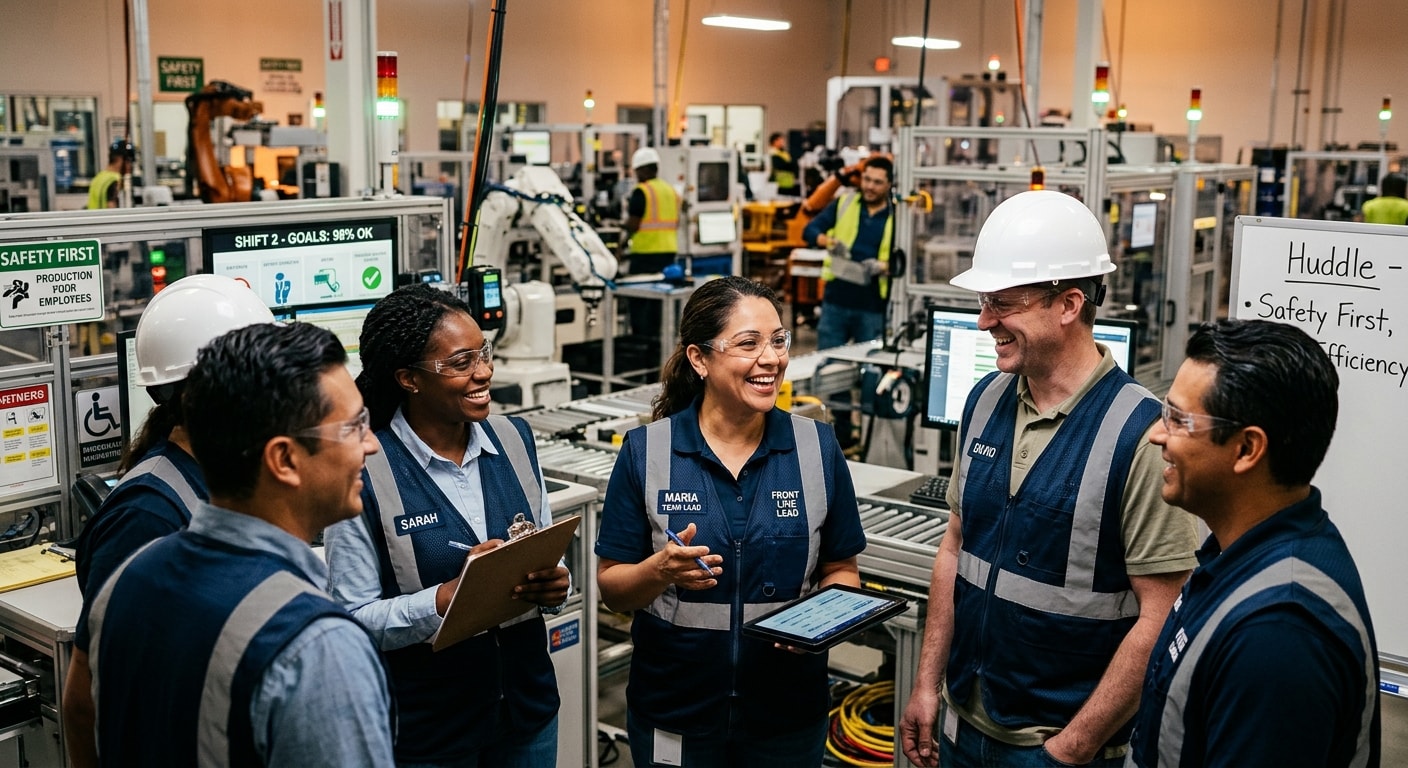
In fast-paced operational environments — from manufacturing facilities and logistics hubs to construction sites, retail operations, and field services — leadership is not measured by corporate buzzwords or slide decks. It is built on the facility floor, in shift huddles, and through day-to-day interactions.
For frontline managers and HR leaders, driving retention, safety, and productivity comes down to one core factor: trust. Frontline team members do not expect perfection from their supervisors, but they deeply value consistency, respect, and clear communication.
Here are the everyday habits that make the biggest difference on the frontline.
Be Visible on the Floor (Management by Walking Around)
Great frontline leaders do not manage exclusively from an office or desk. Spending consistent, meaningful time where the work actually happens shows employees that you respect their daily realities and understand their operational challenges. Visibility signals investment — and employees notice when a manager shows up only when something goes wrong.
Master the 2-Minute Check-In
You do not always need formal 30-minute sit-downs. Brief, high-frequency touchpoints — asking 'How is the equipment running today?' or 'Do you have what you need for this shift?' — build rapport and catch friction points before they derail production. These small moments accumulate into a culture of approachability.
Follow Through on Small Promises
If you commit to replacing a worn tool, fixing a safety hazard, or checking on a payroll discrepancy, do it promptly. In essential operational roles, credibility is won or lost on whether your words lead to tangible action. One broken promise erases ten kept ones in the minds of frontline workers.
Give Immediate, Specific Praise
Do not wait for annual reviews to recognize hard work. Acknowledge great safety practices, overtime efforts, or quality output right on the spot. Specific appreciation — 'Great job handling that rush order smoothly' — hits far harder than generic thanks. Recognition tied to a specific behavior reinforces exactly what you want to see repeated.
Communicate the 'Why' Behind Operational Changes
Whether it is a new safety protocol, shift schedule adjustment, or target update, explain the reasoning behind the decision. When workers understand why a rule exists, compliance increases and frustration drops. Employees who feel informed feel respected — and respected employees stay.
Listen Actively Without Intercepting
Frontline employees are the true subject-matter experts at their stations. When they bring up process flaws or ideas for improvement, listen fully before responding. Involving them in solution-finding boosts morale and operational efficiency. The best process improvements often come from the people closest to the work.
Advocate for Your Team's Needs to HR and Leadership
Stand up for your team regarding fair scheduling, proper equipment, workstation ergonomics, and competitive pay. Employees remain loyal to supervisors who actively champion their well-being and career growth. Being a visible advocate — not just a task manager — is what separates good supervisors from great ones.
The Role of HR: Supporting Frontline Managers
HR managers play a crucial role in enabling these habits. By reducing administrative friction, providing frontline-tailored leadership training, and equipping supervisors with real-time feedback tools, HR empowers floor managers to spend less time on paperwork and more time engaging directly with their teams.
When HR and frontline leadership operate as true partners — aligned on culture, communication, and people development — the results show up in retention numbers, safety records, and team morale. These everyday habits are not soft skills. They are operational strategy.